


Improvisation Is Life Happening for Real | Art Study Journey

Updated: Aug 29
Chinese Version 🔗 https://mp.weixin.qq.com/s/FnduGrQRqLM5lOqdGTEosg
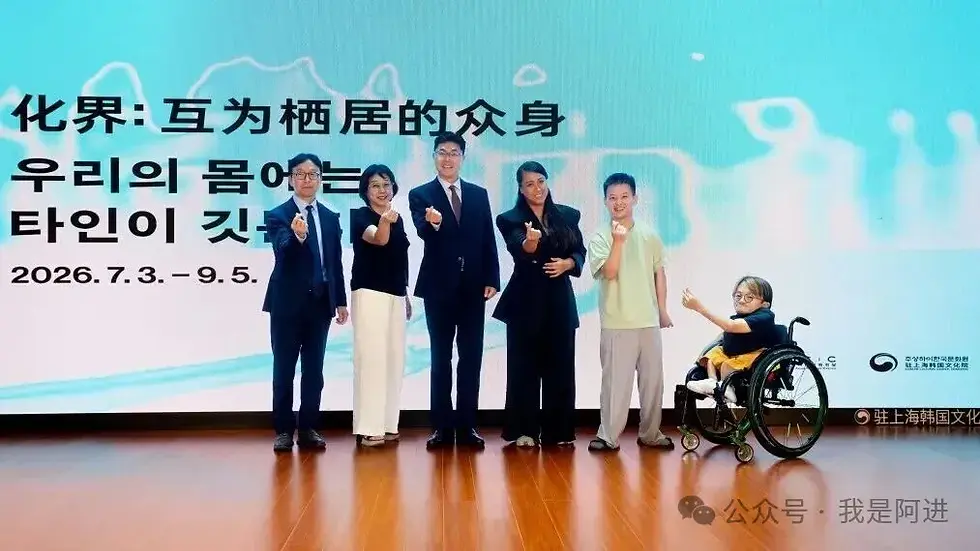
In early July, I was invited to Shanghai to take part in Departing from Myself and Arriving at an Other, a movement workshop presented as part of the exhibition Crossing the Line: Our Bodies, Embedded with Others at the Korean Cultural Center in Shanghai. This inclusive movement practice has been developed by several artists with long-term support from Korea’s Asia Culture Center (ACC), and this was the first time the project had been presented outside Korea.
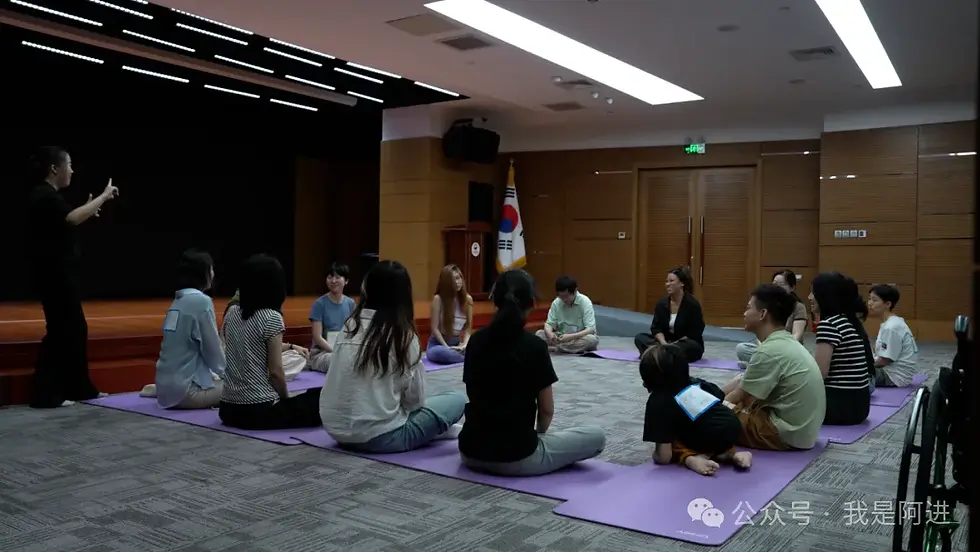
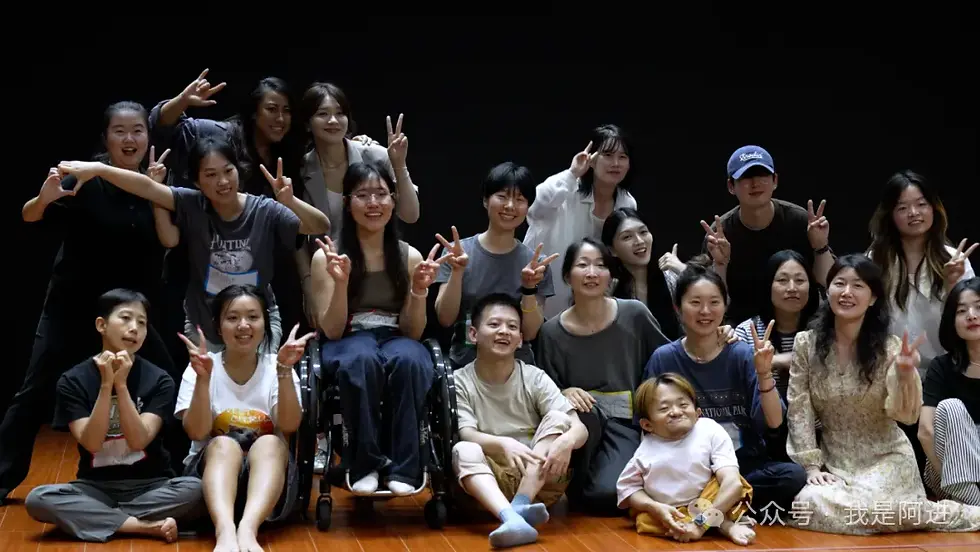
The Korean participants were artist Son Na-ye (손나예), writer Ha Eun-bin (하은빈), and Choi So-young (최소영), a university student and wheelchair user. The organizers also invited three Chinese artists: Huang Te, an artist with cerebral palsy and a participant in the UK–China 2×2 project; me, Zhai Jin (Gene), a wheelchair user with osteogenesis imperfecta and also a 2×2 artist; and Alice Hu Xiaoshu, a Deaf artist based in Europe. The workshop lasted two days, with Korean–Chinese interpretation and sign-language interpretation. More than ten local participants from Shanghai also joined us, including students, people interested in Korean culture, office workers and others.
○ Slowness Creates Waiting, and Waiting Creates Inclusion
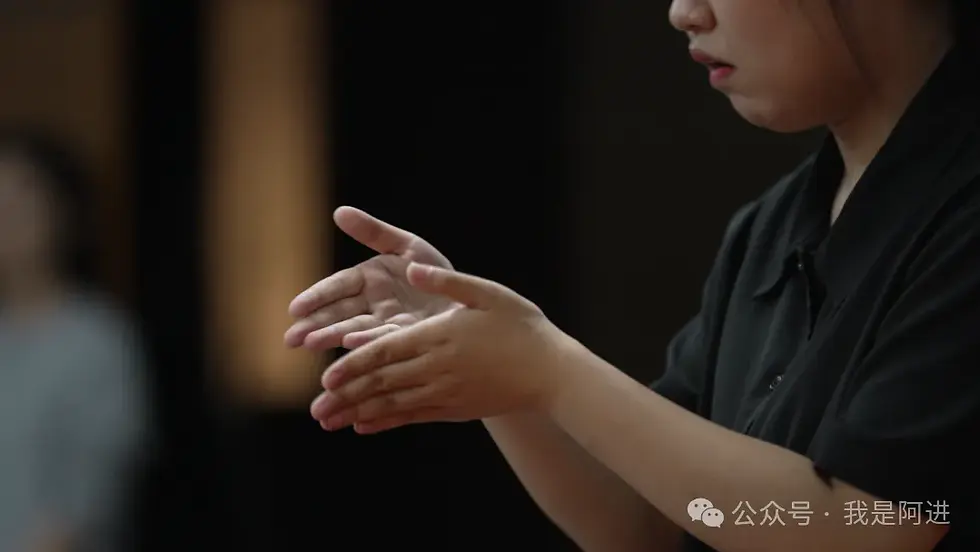
Most participants had never experienced Contact Improvisation or dance improvisation before. Communication also depended heavily on interpretation, so the process was not especially “efficient” or smooth. Language had to move through several layers: Chinese, Korean, English, phone translation and sign language all appeared in turn, naturally slowing everything down.
I’m very grateful to both the Korean-language and sign-language interpreters for their patience. They gave us enough time to actually digest what was being said. As Naye later wrote on social media, this kind of “slowness” activated something new. Inside those apparent delays, we had time to wait, think, and accept differences in culture, physical condition and ways of expression. Every sentence had to wait until it truly reached another person, and those gaps made us pay more attention to faces, bodies and reactions.
Recently I’ve been reading Keith Johnstone’s Impro, and it keeps reminding me of this workshop. Improvisation is not about constantly forcing yourself to invent something new. Very often, it begins by accepting what has already happened and seeing where it might go next.

○ An Improvised Performance Without Rehearsal
Huang Te and I only found out on the third day—the day of the exhibition opening—that we would be performing at the opening. To be honest, I was a little surprised, but given our previous performance experience, it wasn’t really a problem.

At the beginning, everyone entered the space freely, one after another. I was probably the fourth person to enter, but I didn’t join the main group. Like a timid little squirrel, I got out of my wheelchair, tipped it over and left it below the stage, crawled up, then hid underneath the piano and simply watched the space and the relationships forming inside it. Later I started hitting the floor to create sound. Someone responded, so I responded back. Eventually another dancer came over and interacted with me, gradually “calling” me out of my corner.

Most of my group improvisations begin in a similar way. At first I’m very introverted, independent and a little shy. Because my body is small and light, I can easily get swept into a group or be gently “controlled” by larger partners, so I need to maintain a relatively independent and distinct stage state at the beginning.
Watching the video afterwards, you can see many small narratives constantly appearing: relationships among three people, between two people, one-to-one and one-to-many. There is conflict, care, testing and control, as well as accident and expectation. Of course, I am inside these relationships too.
What I do is actually very simple:
Focus. Create structures. Respond to structures.

○ Two Wheelchairs, Two Completely Different Bodies
Soyoung and I both use wheelchairs, but I have osteogenesis imperfecta while she has a spinal cord injury. We do not automatically understand each other simply because we both use wheelchairs.
Thinking back to the first two days, I approached our Contact Improvisation with a small “purpose.” To be honest, I also carry some of my own stereotypes about wheelchair users other than myself. I rarely see wheelchair users without osteogenesis imperfecta moving down onto the floor, so I was curious about how she created movement and what her physical habits were. Maybe she was equally curious about me.
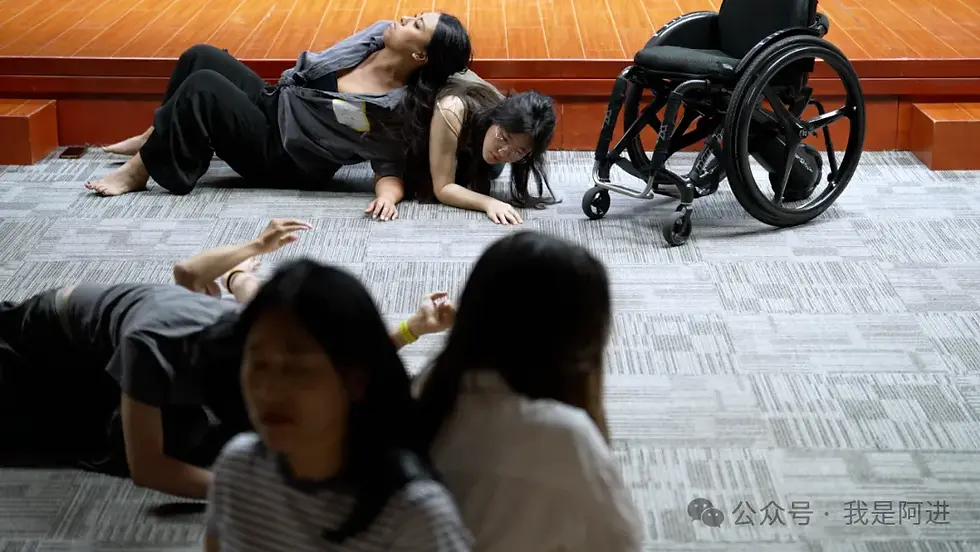
People with spinal cord injuries generally cannot use their lower limbs as supporting points. I noticed that Soyoung often uses her head, shoulders and arms to create powerful movements. Our bodies do not have the kind of strength that allows us to lift, carry or support each other, but she is also very different from other completely non-ambulatory wheelchair users I have worked with.
We were not simply touching each other with our hands. She actively initiated movement using the parts of her body she knows best, paying close attention to every small change. She also responded to my force and movement. While doing what she was capable of, she was also accepting the limits and possibilities of what my body could do.
This kind of dancing together was a new experience for me.
Only during the sharing afterwards did I learn that Soyoung had already been facilitating workshops in this project for four or five years. The project accompanied her through an important stage of her growth, and although she is only about to graduate from university, she is already a very mature artistic practitioner.

○ A Mistake Is Not a Failure. It Might Give Me a Surprise
For this performance, I designed a small entrance for myself: I climbed from my wheelchair onto the wooden stage, then tipped my wheelchair backwards and left it there. It may have looked slightly showy, but there was actually a very practical reason—my wheelchair has no power-assist system, and my arms simply could not push it up the ramp.
I also thought crawling around the stage for the entire performance would become a bit monotonous. After crawling for a while, I would eventually need another way to move. 😂 At the moment I came onstage, I still had no idea what that other way would be.

Soyoung’s wheelchair has power assistance and could go up the ramp, so at that point hers was the only wheelchair onstage.
For some reason, after she got out of it, I found myself climbing into her wheelchair. I had already been curious throughout the workshop about why her wheelchair seemed to have only one brake control, and now I finally had an excuse to try it in the name of performance. 😄
But after sitting down, I suddenly realised that I had no idea how to release the brake. Eunbin was nearby “wrestling” with another dancer, but she noticed that I was fiddling with something. Just as she often notices when Soyoung needs support, she naturally came over and released the brake for me. The whole thing happened as if nothing unexpected had occurred.
I didn’t say anything to Eunbin either. The brake was released, and I simply started cruising around the stage.

○ Improvisation Is a Real Presentation of My Everyday Life
In improvisational dance, I enter an environment, read relationships, and decide when to be independent and when to accept help.
Trust becomes very concrete onstage. Sometimes it means giving my body to another person for a few seconds and then continuing to move. Sometimes I initiate; sometimes I get stuck; sometimes I need someone else to enter what I am doing. Isn’t that already part of everyday life for someone with a severe physical disability?

Near the end of the performance, I wanted to create another visual contrast. Most people were gradually gathering together for the ending, while I wanted to leave that structure first.
Naye noticed this immediately. There was no verbal communication and not even any obvious exchange of glances. She simply used her body to create a moving “bridge” and let me ride that bridge all the way back to the audience seating.
I really liked this part. She did not guide me back into the centre of the group. My decision had already happened, and she entered that decision artistically and helped complete the process.
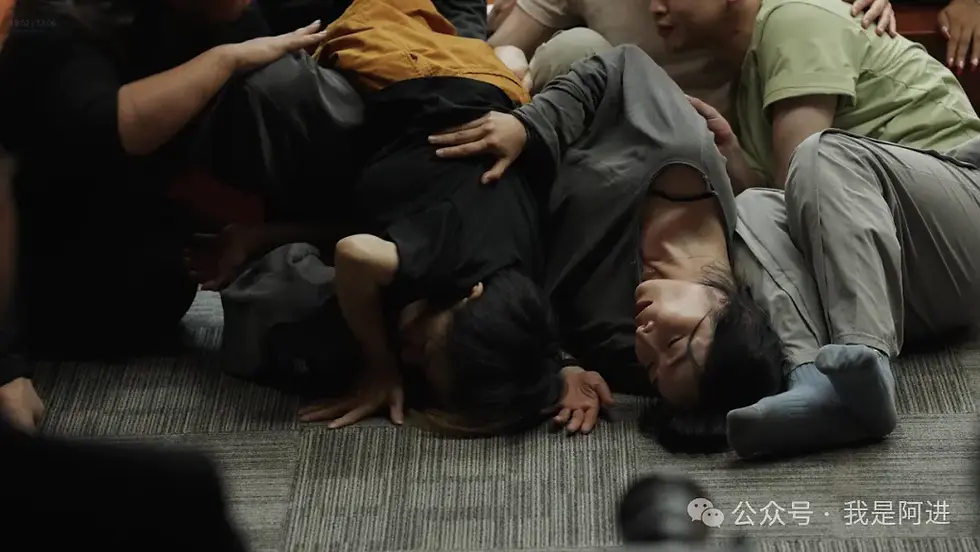
This is also very similar to my life. I do not always need other people to do things for me, but I do need people to understand when they should enter and when they should let me do something myself.
As I described above, improvisational performance does not simply take material from life. It uses the body to present real actions in real time. Life and performance reflect each other.
○ So What Could Improvisation Be for You?
Many friends, including participants in this workshop, ask: What exactly are we dancing? What artistic idea are we trying to express? How are we supposed to start moving? Maybe it is simply about remaining true to yourself?
I spent a week writing this article and thinking about the question, and I still haven’t worked out how to answer it.
I even deliberately tried to remove emotional value judgements such as good, bad, beautiful, ugly or moving. I simply wanted to present what actually happened.
Of course, I also have emotional needs, because what happened was real. And reality is the first thing I look for in my creative practice.

I remember driving Soyoung’s wheelchair around the stage and then suddenly realising I didn’t know how to get out of this unfamiliar wheelchair.
It wasn’t that I physically didn’t know how to get out. I just didn’t know how to do it naturally within the dance relationship happening at that moment. I was worried that a sudden movement might interrupt the dancers around me, so I pretended to keep cruising while secretly looking for someone who could become my “cushion.”
While I was hesitating, Bella, a university student participating in the performance, caught me. She wrapped her arms fully around me and lowered me to the floor very steadily.

She did not have much performance experience and had not even attended the entire two-day workshop, but that embrace was very safe, full and stable. The whole process was unexpectedly smooth, and I felt completely at ease.
Most of the time, the fact that I initiate an action does not mean I must complete every part of it alone—even if I could. Someone else may enter at exactly the right moment, making my action more complete or opening up a new possibility.

So I really don’t think improvisational dance has some mysterious threshold.
Maybe it can be put this way: in that moment, do what you feel needs to be done. Even supporting another dancer as they get out of a wheelchair can already be part of a dance.
You can also watch the full 23-minute performance video at the end of the post and look for your own answers in the narratives created by each shot.

What attracts me most about group improvisation is that you cannot control everything. You do not know what will happen next, who will respond to your movement, or what a relationship will eventually become.
I remember another moment during the first two days. I was lying in the middle of the stage when Naye suddenly came over and started slapping my butt. I immediately responded with my body.
During the sharing afterwards, I said it reminded me of my mother spanking me when I was a child. But honestly, I was just joking.
The truth is that my mind was almost completely blank. I was simply sticking my butt out and responding to the rhythm of her hands.

A butt, a head, a shoulder—as long as what is happening is safe, in that moment they do not need to carry any particular social meaning.
I am simply responding to a structure that has already happened.
It is precisely inside this uncertainty that trust begins to have meaning.
Copyright: Photos and video materials provided by the Asia Culture Center and the Korean Cultural Center in Shanghai.


Comments